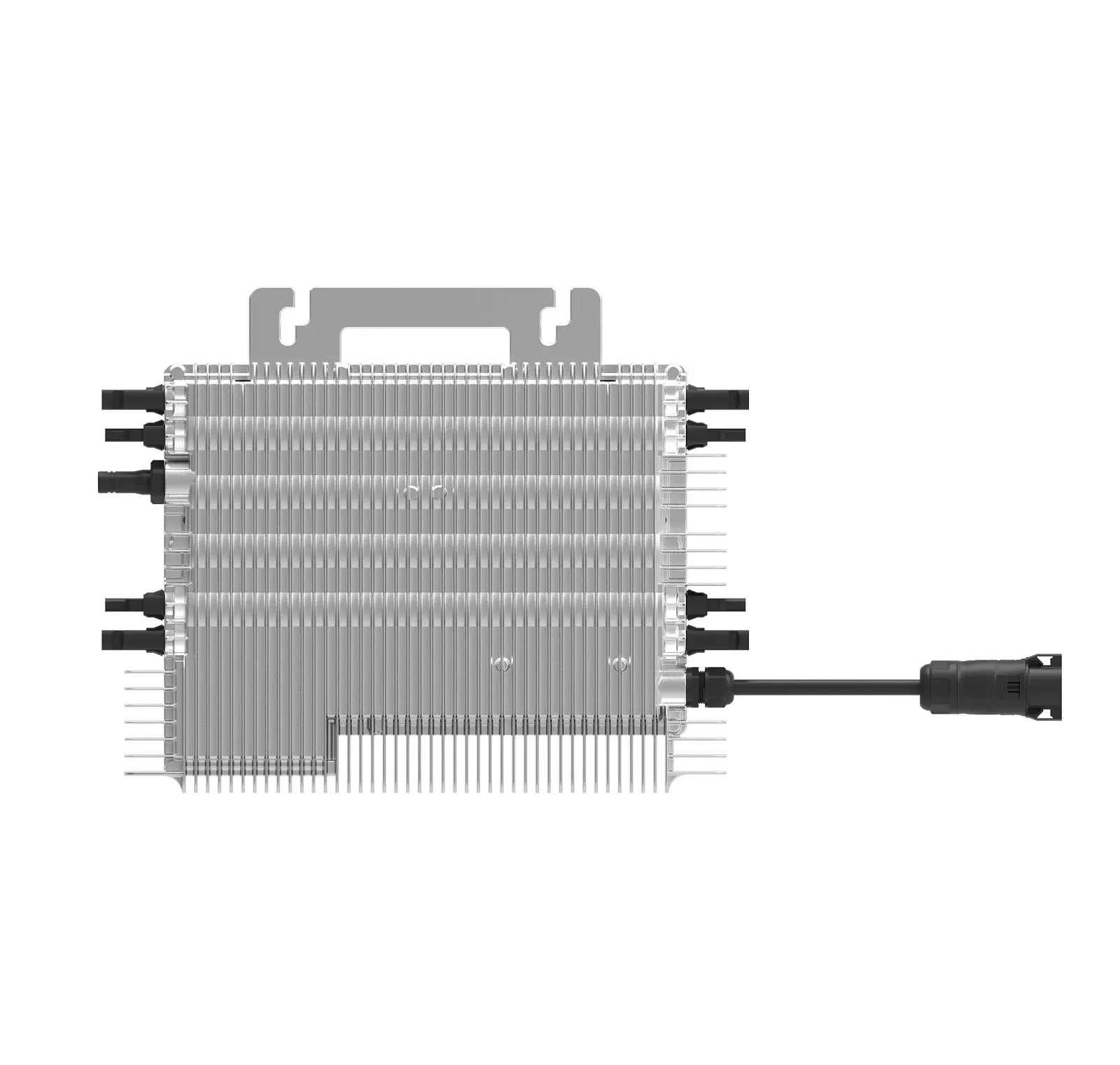
The UK government’s ongoing Department for Energy Security and Net Zero (DESNZ) consultation (open through June 2026) aims to amend the 1994 Plugs and Sockets Regulations to officially legalize plug-and-play solar “within months.”
This update integrates the latest 2026 regulatory shifts with RenewSolar’s specialized research and consultation position with the risks and glossed over problems by the government
1. Safety Assessments & Risk Mitigation
While the government focuses on rapid deployment through major high-street retailers, our original Health and Safety Executive (HSE) assessments on small garden and balcony installations highlight two critical physical risks that the final framework must address:
- Worn-Out Sockets: Standard domestic 13A ring-circuit sockets are not traditionally designed for continuous, multi-hour back-feeding of current. Loose or degraded internal contacts significantly increase arc-fault and localized fire risks.
- Panel Heat Burns: Lower-level installations on garden fences, balconies, or low ground-mounts put high-temperature hardware within reach of residents, children, and pets, requiring explicit thermal barrier or clearance guidelines.
2. Structural Architecture: “One Per Circuit” vs. Capped Single Installs
The baseline policy framework proposes an 800W cap per household. However, shifting the framework to a one per circuit architecture offers a superior engineering path:
- The Multi-Installation Model: Instead of limiting a property to a single 800W node, allowing one micro-installation per independent ring or radial circuit permits households to safely distribute 3 to 4 micro-arrays across separate consumer unit breakers.
- Property Permitted Development: While the government primarily designs this policy around balconies and flats, current planning laws still permit outbuilding installations. A distributed approach unlocks affordable solar for houses via detached garages, workshops, and garden sheds without overloading a single domestic ring circuit.
3. Market Purification & Eliminating Unapproved Hardware
The transition from a regulatory “grey area” to formal legalization presents a vital opportunity to clean up the UK market. Thousands of uncertified, non-compliant inverters are already operating illegally across the country.
The Regulatory Bottleneck: The upcoming transition will stall if major retail platforms continue to list cheap, unapproved imports.
To force the adoption of legal hardware, the government must implement a total sales ban on unapproved micro-inverters. Certified hardware must strictly comply with BS 7671 Amendment 4 and upcoming BSI standards, forcing mandatory anti-islanding protection (cutting power within 0.1 seconds of disconnection) so plug pins never remain live.
Key Policy Benchmarks (2026 Timeline)
| Date | Milestone Status | Operational Impact |
| 15 April 2026 | Passed | BS 7671 Amendment 4 takes effect, establishing the wiring framework for small generators. |
| 30 June 2026 | Current | DESNZ consultation closes on Plugs and Sockets amendments and the Interim Product Specification. |
| Late Summer 2026 | Pending | Anticipated publication of the final BSI product standard, allowing legal DIY sales. |
1. Unidirectional vs. Bidirectional RCD/RCBO Mechanics
The fundamental issue with utilizing standard protective devices for solar integration is that conventional Residual Current Devices (RCDs) and Residual Current Breakers with Overcurrent (RCBOs) are unidirectional. They are structurally engineered on the assumption that power flows exclusively from the grid (source/line) to the domestic appliances (load).
The Damage Mechanism (Reverse Feeding)
When a micro-inverter feeds solar power back into the “load” side of a unidirectional electronic RCD or RCBO, it compromises the internal tracking electronics.
- The Internal Circuitry: Most modern compact, single-module RCBOs use an internal electronic amplifier circuit to process the signal from the current transformer (which detects phase-neutral imbalances). This amplifier is powered internally from the line side of the device.
- The Failure Mode: When the device trips due to an upstream or downstream fault, the mechanical isolation contacts open. However, if a micro-inverter is back-feeding power into the load terminals, the electronic amplifier circuit remains energized from the “wrong” direction. Because there is no internal over-voltage or reverse-polarity protection for the test circuits and processing chips in a unidirectional design, this reverse voltage blind-spots or permanently burns out the delicate internal components.
- The Consequence: The device may physically reset and appear operational, but its residual current protection mechanism is destroyed. It will fail to trip during a genuine earth-fault or lethal shock event.
Bidirectional Hardware
True bidirectional devices lack “Line” and “Load” markings. They utilize dual-directional internal sensing and robust electromechanical components (or specialized dual-source electronic sensing) that handle voltage presence on either side of the open contacts without suffering component degradation or failing to monitor imbalances.
2. Multi-Circuit Homes Shared Across a Single RCD
In properties with split-load consumer units—where a single upstream Type AC or Type A RCD protects a shared busbar feeding 4 to 6 separate miniature circuit breakers (MCBs)—introducing parallel plug-in solar generation creates two serious electrical hazards:
                  [ Shared RCD ]
                         |
      +------------------+------------------+
      |                  |                  |
   [ MCB 1 ]          [ MCB 2 ]          [ MCB 3 ]
(Ring Circuit A)   (Radial Circuit B)  (Solar Plug-in)
      |                                     |
[ Fault Leakage ] <--- Blinds RCD <--- [ DC Injection ]
Hazard A: DC Injection and RCD “Blinding”
Solar inverters inherently generate high-frequency switching noise and can inject smooth Direct Current (DC) residual leakage into the AC network during normal inversion cycles.
- If the shared upstream protective device is an older Type AC RCD, it is engineered solely to detect alternating current faults.
- A DC leakage current exceeding 6 mA saturates the magnetic core of the Type AC RCD’s sensing transformer. This magnetic saturation effectively “blinds” or freezes the RCD.
- If a life-threatening earth fault occurs on Ring Circuit A (e.g., a damaged appliance chassis), the blinded shared RCD cannot trip. The single solar installation on MCB 3 has neutralized safety coverage for the entire half of the home.
Hazard B: Cumulative Leakage and Nuisance Tripping
Conversely, if the shared device is a newer Type A RCD, it can tolerate up to 6 mA of DC leakage. However, modern micro-inverters exhibit natural operational earth-leakage currents (often 1 mA to 2 mA from internal EMI filters).
When pooled on a single shared RCD alongside the cumulative natural leakage of standard household computers, washing machines, and LED drivers, the background threshold easily breaches the 15 mA to 20 mA mark (for a 30 mA rated RCD). This guarantees chronic nuisance tripping, shutting down multiple completely unrelated domestic circuits simultaneously.
3. Regulation Updates and New Build Disconnects
A common point of confusion in the trade is assuming that new-build properties or recently upgraded consumer units are safe for plug-in solar. In reality, the vast majority of newly installed consumer units are entirely unidirectional and highly susceptible to damage if back-fed.
The industry is currently operating within a strict regulatory transition driven by two recent, crucial updates to BS 7671 (The IET Wiring Regulations):
BS 7671:2018+A3:2024 (Amendment 3) — The Bidirectional Mandate
- Effective Date: Published 31 July 2024, taking immediate effect.
- The Rule: Amendment 3 introduced explicit new definitions to Chapter 53 regarding bidirectional power flows. It states that the selection and erection of protective devices must account for bidirectional current. Specifically: “If power flow is not in a single direction, only appropriate bidirectional devices shall be selected and used.”
- The New-Build Gap: Because Amendment 3 was not retrospective, standard housing developers installing consumer units up until early 2026 continued to pack boards with cheaper, single-module unidirectional RCBOs. These devices feature explicit “Line” and “Load” or “In” and “Out” stamped markings, meaning they are legally compliant for standard loads but structurally dangerous the moment a plug-in solar kit exports energy back through them.
BS 7671:2018+A4:2026 (Amendment 4) — The Plug-in Framework
- Effective Date: Published 15 April 2026, with the full transition period hardening on 15 October 2026.
- The Rule: Amendment 4 deleted Regulation 551.7.2(ii), which previously prohibited connecting a generating set via a standard plug and socket. This officially opened the legal door for plug-and-play solar under 800W.
- The Protection Catch: Amendment 4 mandates that any circuit accepting a plug-in solar system must feature a minimum of Type A (or Type B) RCD protection that is explicitly certified for bidirectional operation by the manufacturer.
If a homeowner plugs an 800W balcony kit into a new-build property containing unidirectional single-module RCBOs, they violate BS 7671 Amendment 4, void their circuit protection warranties, and run a direct risk of frying the internal safety electronics of their consumer unit as well as themselves and anything connected.
The government’s primary motivation is clear: they want plug-in solar available on high-street shelves “within months” to ease energy bills for renters and flat owners. However, the technical realities of domestic wiring regulations (BS 7671 Amendment 4) create a major conflict between the political desire for “cheap and easy” and the structural reality of UK home electrics.
1. Have These Points Been Missed in the Consultation?
The short answer is yes, the critical details are heavily glossed over, while the broader structural mechanics are recognized but passed down the line.
- The RCD Blindness Deficit: The DESNZ consultation relies heavily on an independent safety study concluding that plug-in kits are “safely compatible with UK domestic wiring provided minimum product standards are met.” However, this study assumes the internal hardware of the house works. The consultation documents do not explicitly warn consumers that plugging an 800W kit into an older Type AC RCD completely neutralizes shock protection for the rest of the appliances on that split-load board.
- The Bidirectional Gap: The policy documents treat the installation as a simple consumer appliance choice. They largely skip over Chapter 53 of BS 7671 (Amendment 3/4 mandates), which dictates that protective devices must be rated for bidirectional power if back-feeding occurs.
- The Subcontracted Burden: Instead of fixing these systemic issues inside the house, the government is leaning on an “Interim Product Specification” paired with the upcoming BSI product standard (expected around July/August 2026). They are placing the entire safety burden on the micro-inverter’s internal anti-islanding mechanics (demanding a cut-off within milliseconds of being unplugged) and basic consumer instruction leaflets.
2. Can the Burden on Retailers Truly Be Mitigated?
If major retailers like B&Q, Currys, and Asda begin selling these kits as “plug-and-play” consumer items, they face a severe liability bottleneck under the General Product Safety Regulations (GPSR).
The burdens cannot be mitigated unless a strict three-tier framework is enforced at the point of sale:
Retailer Compliance Framework
| Tier | Requirement | Implementation Method |
| 1. Hardware Sterilization | Ban on standalone unapproved micro-inverters. | Retailers only sell sealed, bundled kits where the inverter is physically pre-integrated or digitally locked to the panel. |
| 2. Digital Pre-Qualification | Prevent blind sales to incompatible homes. | A mandatory point-of-sale digital questionnaire. The customer must confirm or upload a photo showing their consumer unit has Type A/B bidirectional RCBOs or RCDs before checkout is cleared. |
| 3. Standardized Consumer Sign-off | Legal liability shift. | A unified statutory warning leaflet explicitly stating: “Plugging this device into a circuit protected by a Type AC RCD, or a unidirectional electronic RCBO, voids the product warranty and creates a fire/shock hazard.” |
3. How a Layperson Can Safely Install Plug-In Solar
To bypass the need for an expensive fixed installation while maintaining absolute safety, a layperson must follow a rigid assessment path:
The Safe DIY Checklist
- Step 1: Check the Fuse Box Markings The consumer unit must be inspected visually. If it features a single main RCD covering multiple switches, look for the stamped symbol. If it shows the Type AC symbol (a wave ~), the project must stall. If it features modern Type A (a wave over a straight line with dashes) or Type B markings, it can handle the DC leakage.
- Step 2: Identify Device Directionality If the board uses individual RCBOs (common in modern or rewired homes), look for stamped markings like “Line/Load” or “In/Out”. If these markings are present, the device is unidirectional. Back-feeding it will eventually burn out its internal testing electronics. It must be a clean bidirectional device (no line/load restrictions specified by the manufacturer).
- Step 3: Conduct a Socket Integrity Test The target socket cannot be a worn, loose plug behind a kitchen unit or an old outdoor socket with degraded contacts. It should be a high-quality, clean, tightly-gripping single socket—ideally on a circuit with a low continuous base load (like an outbuilding, shed, or dedicated radial) rather than a heavily loaded kitchen ring main.
4. The “De Facto” Paradox: Booked Inspections vs. DIY Realities
The reality of plug-in solar in the UK creates a fundamental paradox. The legalization framework went live on 15 April 2026 via BS 7671 Amendment 4, but because the final BSI product standard won’t drop until later this summer, the only fully legal route right now is to pay a registered electrician (£250–£450) to sign off the circuit.
Once the BSI standard lands and removes the legal requirement for an electrician, the practical dilemma begins.
The Reality Check: If a layperson is forced to book a £150 Electrical Installation Condition Report (EICR) or a socket inspection before plugging in a £400 balcony kit, the economic incentive of “cheap, democratic solar” evaporates instantly. The payback period doubles before they generate a single kilowatt-hour.
The government knows this. Their current strategy is to absorb the risk by counting on the micro-inverter’s internal safety chips to protect the user from immediate shocks, while largely turning a blind eye to what happens inside the consumer unit.
The policy will successfully democratize solar for flats and renters, but it introduces a slow-burning technical debt. Millions of UK homes have old electrical infrastructure. Without a rigid point-of-sale gatekeeping mechanism managed by retailers, the market will inevitably see a rise in fried unidirectional RCBOs and blinded Type AC RCDs—rendering whole-house shock protections useless without the homeowner ever realizing it.

RenewSolar has been mindful of consumer needs and safety, with application of the gen port, It is practical for homes to have a dedicated socket for plug in or solar installations that are installed before the consumer units to avoid the safety issues, and this is how many of “normal” solar installations are done. its not for DIYers.
If the home owner installed a dedicated circuit then this opens the opportunity for renters or those wanting “plug in” solar to effectively have up to 8 micro inverter units or other solutions with more power. The 800w limit is “token” solar and presents a small off set to bills. two would only partly cover the cost to boil a kettle, but the power needs would be better set at around 2kw. With a system of this size, then a battery system would be a greater benefit.
If we look at the history of the scams, a grid tied 800w system only works to save buyers what they can produce and use. We are talking about £0.27 per day, while lower day time base loads and near max power would result in free energy being sent to the grid and sold to others making companies more profits. – the debate of green or greed can be had in the comments below.
No responses yet