Outcome Reports into the Cause
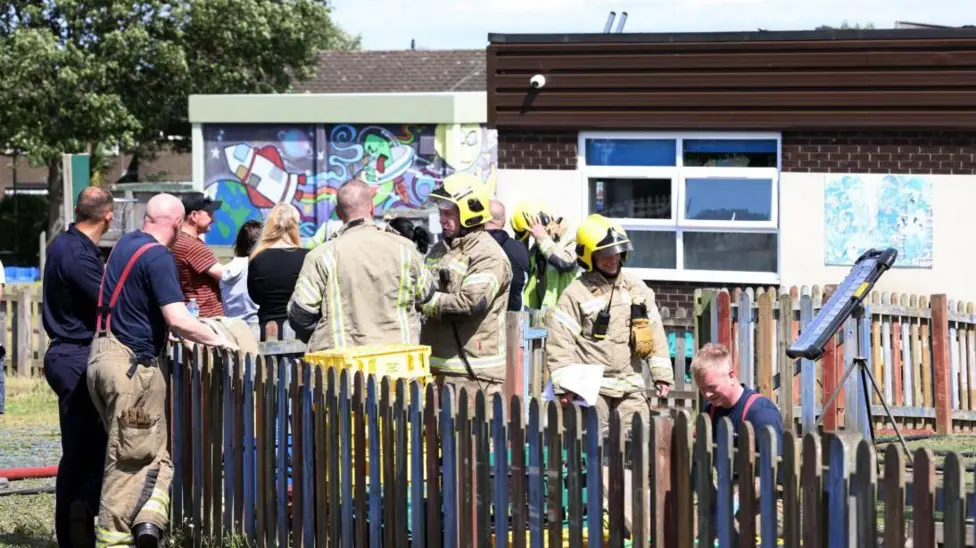
Recent investigations by Suffolk Fire and Rescue Service and Suffolk County Council into multiple school roof fires (including Sidegate Primary School in Ipswich, Brooklands Primary School in Brantham, and East Bergholt Primary School) have targeted commercial solar PV arrays installed between 2011 and 2016.
While full, finalized forensic reports for the most recent incidents are ongoing, formal findings from earlier school fires (such as East Bergholt) explicitly attribute the root cause to defective solar panel components and installation practices rather than external factors. As a direct result of these fires, councils have initiated emergency risk-mitigation programs, isolation protocols, and temporary shutdowns of hundreds of school systems deployed during that mid-2010s peak installations period.
Solar Maintenance
A major systemic factor highlighted in UK solar safety assessments is the historical lack of rigorous, ongoing DC-side maintenance.
- The Issue: Many public sector installations were treated as “fit-and-forget” systems after deployment.
- The Consequence: Environmental exposure, thermal cycling, and UV degradation over 10+ years cause mechanical stress on joints and components.
- The Solution: Current industry recommendations emphasize moving away from basic visual inspections toward advanced diagnostic practices:
- Thermal Imaging (Thermography): Using drones or handheld infrared cameras to find localized hot spots on panels and junctions before they catch fire.
- Wet Insulation Resistance Testing: Measuring resistance under damp conditions to identify insulation breakdown or early-stage path-to-earth faults that are invisible in dry conditions.
- String Monitoring and Inverter Logs: Checking logs for “Insulation Resistance Faults” (IRF) or isolation errors, which act as early warnings before a hard fault develops.
- Thermal Imaging (Thermography): Using drones or handheld infrared cameras to find localized hot spots on panels and junctions before they catch fire.
Were AFDs Installed?
No. The vast majority of UK school solar installations from the 2011–2016 period did not have Arc Fault Detection (AFD) or Arc Fault Detection Devices (AFDDs) installed on the DC side.
During that era, UK Wiring Regulations (BS 7671) did not mandate AFDDs. Even today, while BS 7671 recommends or mandates AFDDs for specific high-risk AC circuits (such as in schools and higher-risk residential buildings), standard AC AFDDs do not protect the DC string of a solar array. DC arc-fault detection was not integrated into mainstream commercial string inverters in the UK market until recently.
What Would AFDs Do If Installed?
If DC Arc Fault Detection was installed (either integrated into modern inverters or via specialized string-level protection), it would significantly reduce, and in most cases prevent, solar-driven fires.

How They Prevent Fires
Unlike standard fuses, Microelectronic Circuit Breakers (MCBs), or Residual Current Devices (RCDs)—which only react to overcurrents or imbalances to earth—an AFD utilizes microprocessor algorithms to continuously analyze the electrical waveform.
Quenching the DC Arc: Because DC voltage does not pass through a zero-point (unlike alternating current which self-extinguishes 100 times per second at 50Hz), a DC arc will burn continuously at temperatures exceeding 3000°C until the physical gap opens too wide or fuel runs out. By opening the circuit instantly, the AFD starves the arc of current, quenching the plasma before it ignites surrounding roofing materials.
Signature Detection: It looks for the specific, chaotic high-frequency noise signature of an electrical arc.
Rapid Disconnection: When a series or parallel arc is detected, the device trips and isolates the circuit in milliseconds.
BRE Reports into MC4 Connections and Sources of Fires
The definitive data on this in the UK comes from the Building Research Establishment (BRE) report “Fire and Solar PV Systems – Investigations and Evidence,” funded by the Department for Business, Energy and Industrial Strategy (BEIS).
The BRE peer-reviewed analysis identified DC connectors (commonly referred to as MC4s) as the second largest source of PV-related fires, just behind poorly isolated DC isolator switches. The report highlights several specific failure modes for MC4 connections
RenewSolar Maintenance, Retrofitting, and System Safety
At RenewSolar, safety is our core priority. While we do not employ aggressive sales tactics for maintenance packages, we strongly recommend structured, ongoing testing for both residential and commercial solar arrays. Solar PV systems operate under harsh environmental conditions; treating them as “fit-and-forget” installations introduces significant long-term risk.
1. The Importance of Baseline Resistance Testing
A critical gap in most standard UK installations is the complete absence of initial testing data. Every RenewSolar commissioning process includes comprehensive Wet Insulation Resistance Testing.
- Why it matters: This test establishes a precise baseline of the system’s electrical resistance.
- The risk: Over time, environmental degradation causes resistance growth. By comparing ongoing maintenance data against our original baseline, we can identify insulation breakdown and early-stage path-to-earth faults long before they develop into hard faults or fire hazards.
2. Limitations of Physical Inspections
While physical inspections are necessary, they are not infallible. Many critical components are hidden beneath panels or routed through inaccessible voids.
Furthermore, thermal cycling—the continuous heating up during the day and cooling down at night—causes mechanical expansion and contraction. This physical movement can cause internal connections to loosen, degrade, or migrate over time, creating hidden fault conditions that can sit undetected for years until a catastrophic failure occurs.
3. Recommended Inspection & Retrofit Schedule
With solar PV infrastructure, the old adage “if it isn’t broken, don’t fix it” does not apply. A latent DC fault will continue to generate revenue right up until the moment it arcs, and the resulting fire damage is incredibly costly.
To mitigate this, we recommend a structured inspection framework:
- 6-Month Post-Installation Inspection: To verify torque settings and settle-in tolerances after initial thermal cycles.
- 12-Month Post-Installation Inspection: To capture a full year of seasonal environmental exposure.
- 5-Year Periodic Inspection: Comprehensive diagnostic review of components, cable management, and insulation integrity.
- Ad-Hoc Event Inspections: Immediate diagnostic checks if power output drops abnormally, or following severe weather events such as hail storms, lightning strikes, or high winds.
4. Addressing Legacy DC Isolator Risks
Many older legacy solar systems (typically pre-2024) utilize external DC isolators that are prone to internal failure. Historically, the UK market was flooded with sub-standard or counterfeit switches that were “not as advertised,” creating a severe internal arcing and fire risk under load.
- The Remedy: These legacy switches should either be upgraded to modern, fully compliant, high-specification DC isolators, or, if the system utilizes a modern inverter with an integrated internal DC isolator, unnecessary secondary external isolators should be safely decommissioned and removed to eliminate redundant failure points.
5. Arc Fault Detection Devices (AFDDs) & System Upgrades
Standard solar fuses and overcurrent protection devices do not protect against arc faults; they only react to solid overcurrent short circuits or grounding issues. A high-temperature series arc fault can burn continuously below the threshold required to blow a fuse.
Depending on your existing equipment, upgrading your system’s safety profile may require retrofitting:
- Modern Systems: Almost all standard RenewSolar installations utilize modern inverters with integrated Arc Fault Detection (AFD) built directly into the PV side. Additionally, all RenewSolar PV Distribution Boards feature integrated Arc Fault Detection and Surge Protection Devices (SPD) as standard.
- Off-Grid & Older Systems: Off-grid configurations and legacy inverters typically lack built-in DC arc protection.
- Retrofit Costs: For systems lacking native protection, RenewSolar can supply and install a dedicated hardware AFDD solution for approximately £280.00, including all hardware, installation, and compliance certification.
The Projected 2026 Run-Rate
Data compiled by global business insurer QBE (via comprehensive Freedom of Information requests across the UK’s fire services) established a definitive upward trajectory:
- 2022: 107 solar-related fires
- 2023: 128 solar-related fires
- 2024: 171 solar-related fires
This represented a 60% increase in fires over a two-year period, meaning UK fire crews have been attending a solar-related fire approximately once every two days. Based on the continued rapid deployment of residential and commercial solar alongside aging legacy infrastructure, the projected baseline for 2026 is on track to meet or exceed 180 to 200 incidents nationally by the end of the year.
Emerging 2026 Fire Safety Research
The surge in incidents has triggered new regulatory focus this year. A major study published in early 2026 by the Building Safety Regulator (BSR) and the Health and Safety Executive (HSE) provided empirical evidence on why these fires are spreading.
Their 2026 testing revealed that the fire risk is heavily dictated by component choices:
- Plastic-Backed Panels (Class C): Extensively supported vertical flame spread across pitched roofs, allowing fire to travel rapidly underneath the array where heat accumulates in the void.
- Glass-Backed Panels (Class A): Performed significantly better, confining flames to the immediate area of the arc or ignition point.
Where the fires originate: According to the localized fire service data fueling these 2026 reviews, the majority of solar fires do not start within the silicon cells themselves. They originate at the inverter, the DC isolator switches, or are caused by series arcs via mismatched/cross-mated MC4 connectors hidden beneath the arrays.
No responses yet